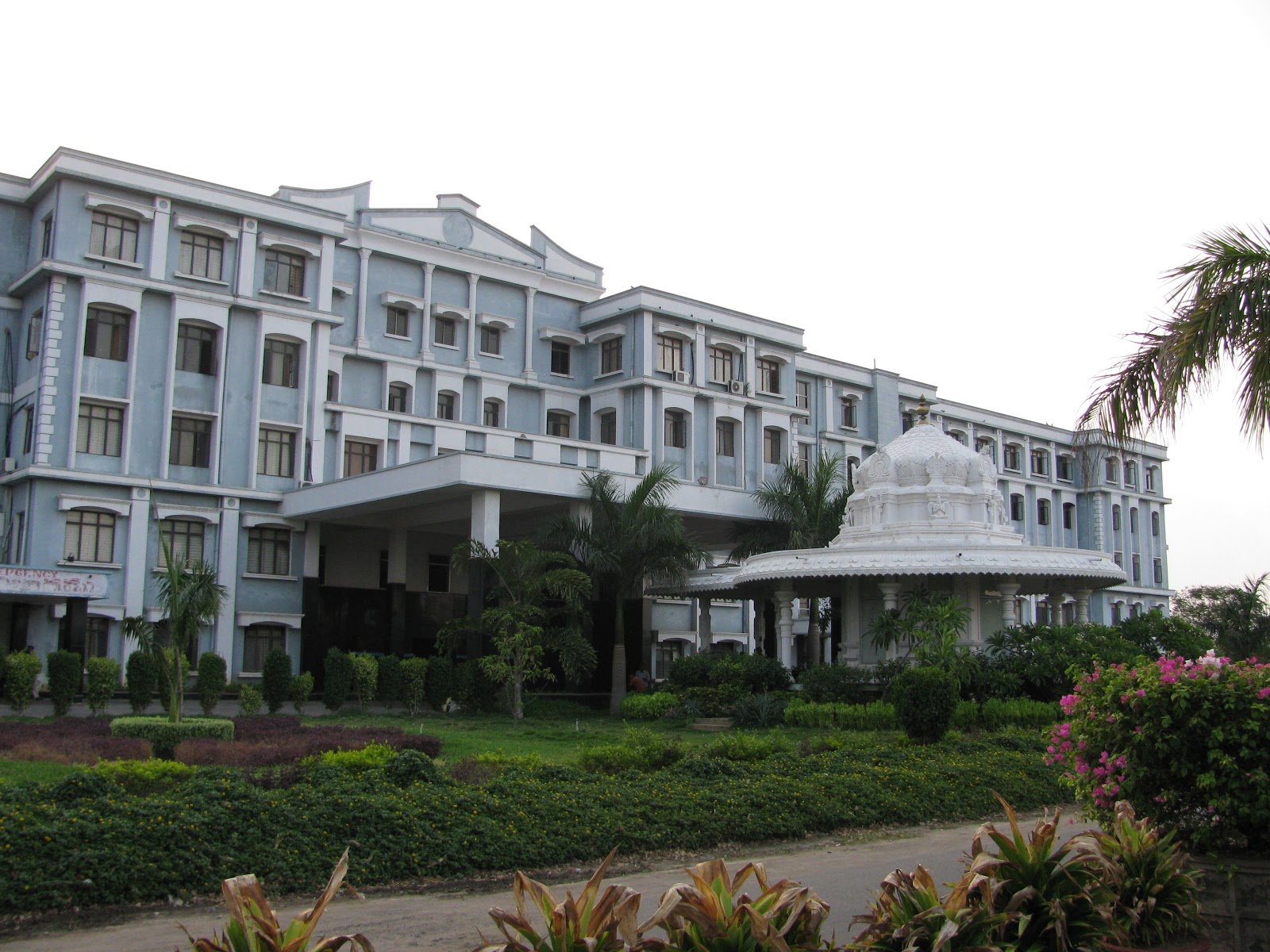
Wednesday, June 5, 2013

Sunday through Wednesday (June 2- June 5)

Sunday June 2nd:
Sunday the hospital is mostly closed except for the ER and the main floor pharmacy.  Arsen and I spent most of the day trying in vain to catch up with jet lag.  We were still trying to sleep on EST, but were fed on India time.  We wound up napping through the day and eating what I now refer to as our "3 round (the shape I will be in when I return to the states) meals" in between.

We tried to avoid the heat as much as we could, but ventured out in the evening before dinner to walk the grounds and get some pictures.  I continue to be struck by the poverty and the developing nature of this country.  The roads are poorly maintained, all parking is on gravel or dirt, and there is open water of some sort (it sure smells like sewage to me) flowing along the grounds to the municipal system.

Most of the pictures we took Arsen has already posted (front of the hospital and college, main floor pharmacy, etc), but I'll add a few more:

Arsen in front of the main pharmacy
As we returned to our room, we were met in the stairwell by a young man (probably about our age) who had an uncle in the hospital for stent placement.  He kept apologizing saying his English wasn't good, so I tried to explain to him that it's much better than my Telugu!  I have always been surprised by the presence of people here not directly receiving care.  The culture appears to be extremely family centered.  Children, parents, and extended families all come to the hospital to support the sick.

We were met by our excellent wait staff Dasaradh at the foyer leading into the guest wing.  I didn't think about taking pictures of our living quarters at the time, so I will do it later in the week.


Arsen with Dasaradh in the foyer.  Our wing is the doorway seen in the left window.
Myself in front of the Guest Wing
Monday June 3rd:
Today we spent time in the central pharmacy reviewing how drugs are ordered and inventory is managed.  It was interesting to see the level of communication that occurred between each of the 3 satellite pharmacies (Inpatient, Operation Theatre, and Main Pharmacy) with the central or "Main stores" pharmacy that supported them.  No dispensing occurs from Main Stores.  It is more of a drug storage room with a high focus on cost reduction (vendor selection) and inventory management via perpetual electronic monitoring of all four pharmacy locations.

When a drug is short at the satellite pharmacy, it must communicate this shortage with the central or Main Stores pharmacy.  The central pharmacy then can either resupply the pharmacy from stock on hand, order the medication or device through various vendors, or direct the transfer of the goods between the satellites themselves.

We got to witness a vendor dropping off medications and helped the pharmacy staff to check them in (lot #, expiration date, package size, drug name and strength, etc).  None of this is done by barcode, leaving a potential for error.  As noted in other posts several times, this country is still developing and the hospital can probably not yet afford this technology.  The pharmacy staff must take diligent care to check orders and requisitions by hand and then input them into the system.  It was valuable to see inventory handled without the barcoding.  It gave me a new found appreciation for the technologies I have enjoyed in my brief retail experience and also in IPPE hospital settings.

We also spent some time in the Medical Records department.  This is the department is responsible for keeping and maintaining the documents for patient visits.  None of this data (aside from the visit number) is recorded electronically in the patient's chart yet, so Medical Records plays a vital role in hospital function.  The director is intimately aware of the goings on at the hospital, and could recite statistics about average daily admissions for most of the wards and superspecialties for both inpatient and outpatient visits.  Roughly 6,000 patients visit the hospital outpatient departments daily.  The number for inpatient visits are much lower (around 300 or so).

At Medical Records we learned about AAROGYASRI.  This is the equivalent of Medicaid in the Andhra Pradesh region.  Patients below the poverty line receive care for free.  It is payed for by the Andhra Pradesh regional government (capital in Hyderabad) and has become a model for other provincial governments in India.  It has also attracted citizens from other regions to come for care at Andhra Pradesh hospitals.

After being dismissed to our quarters for lunch and rest, we spent some time at A.R.T. or Antiretroviral Therapy.  This department is the HIV department of the hospital.  Most HIV cases are HIV-1 in the region.  Patients are given their medications for free to increase compliance as much as possible.  This is done through a partnership with an AIDS program sponsored by the national government in New Delhi.  All AIDS patient data is sent to this foundation in New Delhi.  The A.R.T. department has its own pharmacist working there.  The primary roles of the pharmacist are to conduct pill counts of old medication bottles to assess adherence, and to dispense the new bottles as ordered by the physician.  We will be spending more time at A.R.T. either tomorrow or Wednesday.

Tuesday June 4th:

We started our day back in the Main Stores pharmacy at ground level.  As on our tour and for a few minutes yesterday, we were encouraged by Mr. Nayak to familiarize ourselves with some of the drug stock.  We went through most oral preparations on our tour and yesterday.  Today we focused on eye and ear products, topicals, etc as well as drugs that have to be stored in controlled climates.  Many of the generic drugs are familiar, but their brand names are not.

Here are some examples:

Piperacillin/Tazobactam- Zosyn in the US, Tazomac in India
Pantoprazole- Protonix in the US, Pantop in India
Mometasone- Nasonex in the US, Metaspray in India
I could probably spend a full week going through the Main Pharmacy Stores just observing the differences in branding between the US and India.  Augmentin, Carafate, Lovenox, Diprivan, Tri-Pak, and countless other medications are branded differently in India.  What's worse is some Medications have multiple brand names.  This occurs because drug manufacturers are allowed to brand generic drugs for their own for sale in India.  Doctors write in brand name only, which is a potential for further confusion.

Azithromycin- Azimen 250 and Azibact 250 in India
Z-Pak in US
After spending some time with the drug stock, we discussed the role of the P&T committee or Pharmacy and Therapeutics Committee.  The role of P&T is much the same as it is in the US.  Formulary management and inventory control are the central responsibilities. Mr. Nayak was kind enough to give us a copy of the P&T's ultimate output:


NRI Hospital Formulary

In the afternoon we spent time in the Main Pharmacy discussing some miscellaneous things.  The big thing I continue to take away from this trip is the different roles of pharmacists between the US and India.  There is no monitoring of drug interactions by pharmacists.  Patients are barely counseled in speech or writing.   Pharmacy is strictly dispensing here at NRI.  Labels aren't even printed.  We have discussed this as a product of under regulation of the profession.

Wednesday, June 5th.  

Today was easily the most fun day I've had since arriving at NRI.  We spent very little time in the hospital this morning, and instead spent it at the college down the street.  The rain this morning provided a welcome relief from the heat, so we decided to take advantage of the bearable weather and walk.

We spent time in 4 of the college's departments.  There were cadavers at the anatomy lab which a few students were examining in preparation of their upcoming exams.  We also spent time in the physiology department (they separate the two in their curriculum unlike our IBHS curriculum at Shenandoah), biochemistry, and pharmacology.

The faculty members seemed pleased to have visitors since so few students were present in the building.  We interacted with around 10 faculty members.

The fun of the day occurred in the pharmacology department.  The lab technicians were eager to show us just about every experiment in their curriculum.  We watched as they conducted qualitative experiments to show the presence of alkaloid drugs (Belladonna, Vinca-alkaloids, Ergot-alkaloids, some opioids, etc) and glycopeptides like digoxin.  These tests would allow a practitioner to rule out (or in) suspected overdoses.

The test tube to the far left in the first row shows the Molisch Test for the presence of glycopeptides.  The white, green, and brown preciptates are Mayer's, Hager's, and Wagner's tests respectively.  They test for the presence of alkaloid drugs.
The Pharmacology Department also had an extensive museum with posters of mechanisms of action and various other aspects of pharmaceutics, pharmacokinetics, and pharmacology:

Example of a poster in the pharmacology museum. HIV Drugs
In the next room, the lab technicians showed us various ways that medical students test the efficacy of drugs.  Animal model experiments were present for everything from depression and memory drugs to diuretics, pain medications, and muscle dexterity:

Plus Maze for antidepressant drugs.  Animals exposed to effective antidepressants should spend more time exposed to light instead of in the dark places.

This test is for diuretic drugs.  Animals are placed in the top and given food and water.  Urine output is measured at the bottom before and after diuretic administration.
The staff at the pharmacology department was great.  They worked well as a team showing us their experiments both in vitro and in vivo.

Arsen, NRI Pharmacology lab technicians, myself, and Mr. Nayak (our preceptor)
The grounds at the NRI Academy of Science Medical College are fantastic.  As with the hospital, most everything is open to the air.  This facility is roughly 5 floors arranged in a box, with a nice garden in the middle.  The student and faculty wings flank the box, which is used only for academics.

Garden at NRI Medical College

I'll let Arsen fill any holes I left.  I know he has a ton more pictures.  We decided to fall into a routine of me updating on the first half of the week in one big batch and him following later in the week with the second half.

Tomorrow (Thursday) we travel roughly 50km to the Chebrolu Hanumaiah Institute of Pharmaceutical Sciences.  This college is one of the few in India to offer a PharmD program and the first in Andhra Pradesh.  Maybe I'll be able to grab a video clip of the driving on the way over.  Trust me.  It's exactly like what you see if you google "driving in India."


Monday, June 3, 2013

Saturday, June 1st: NRI Academy of Science


Tom and I enjoyed our first breakfast ever at the NRI Academy General Hospital at 8 am sharp. I was still sleepy then since I woke up around 2 am that morning and went back to bed around 6. We devoured a delicious meal, high in carbohydrate composed of tea with milk, deep fried pastries, Indian flat bread, and samba soup.
Breakfast
Tom, 1st Indian breakfast experience!
At 9 AM, the medical administrator came to our room, and escorted us to the Superintendent of the hospital. The Superintendent affirmed that we were welcomed in their facilities. He told us not to hesitate to contact him if needed. The medical administrator showed us his office as well. Then, we went down to the lobby where the main pharmacy is located to meet the pharmacist in charge, who is also our preceptor. Next, they drove us to the medical college where we meet the Treasurer of the Medical College. He told us that he was from Chicago, and gave us a quick run down of their activities and requested that a cellular phone be provided to us in case we need assistance.
NRI  Medical College
They drove us back to the general hospital where the PIC gave us the tour of the entire hospital, including a thorough visit of the four pharmacy entities that operate in the hospital.
The Main (outpatient) pharmacy is located on the ground floor, right at the entrance of the hospital, and is opened 24 hours a day, 7 days a week! 
Main Pharmacy, NRI General Hospital
The Central pharmacy is situated on the first floor, yet at the back of the hospital. The Central pharmacy replenishes inventories of other pharmacies and wards at their requests, and is responsible ordering and receiving shipments. The inpatient (IP) pharmacy and the operation theatre (OT) pharmacy are both located on the second floor. The IP pharmacy serves hospitalized patients while OT pharmacy supplies only surgery related equipments and drugs to the OT department of the hospital.
The PIC discussed each pharmacy work schedule, staffing, storage requirements and licensure. He personally accompanied us to several departments in the hospital to learn about their functions and their links to pharmacy. Tom and I had to opportunity to ask questions and talk to many physicians or nurses in charge.
We visited all the 5 levels of the hospital. A lot of walking and climbing of stairs were involved as the elevators were reserved for physicians and critically ill patients.
We will be working Monday to Saturday, and off Sundays.
Tom and I were ecstatic to realize that the Internet was installed in our room by the time we returned.

Our typical lunch /dinner  (flat bread, curry, soup + rice and Indian yogurt)


Sunday, June 2, 2013

Travel Summary: Dulles, VA to Vijayawada, India (May 29th to 31st)


May 29th.
The journey was about to start!  I arrived at Washington Dulles International Airport about two hours before the 10 hours flight to Istanbul. I checked my luggage, received my boarding passes and went through the TSA control. Everything went  swimmingly. Then, I met Tom in the restaurant facing our boarding stand. Our seats in the airplane were far apart. The flight was not as exhausting as I was expecting it to be, aside the crying of a baby during almost the entire flight.

May 30th
The view of Istanbul, Turkey from the airplane was mesmerizing. In contrast, their airport or precisely the waiting area did not impress me, and was well congested. We even saw a group of people openly drinking alcohol near the boarding area. The airport had an old fashioned appearance.

The flight from Istanbul to New Delhi went well apart of a child crying incessantly, again. The served meal was tasty. I met an old gentleman in the plane. He was fluent in French yet he could not understand any English. I ended up being his “interpreter” during the flight. I helped him order his meal as well. He was grateful, and it was a pleasure to me conversing with him in French.

May 31st 
We landed at the Indira Gandhi International Airport around 4 AM, and the temperature outside was well over 30 º C. However, we did not feel it because we stayed inside the whole time. Their airport was clean, gigantic, and modern. We found our baggage ok.
Tom and I exchanged our US dollars to Indian Rupees. Then, we walked to the other side of the airport to access the local airplane transfer zone. It was interesting to come across a pharmacy chain in the airport, which led me to talk to the pharmacist. He told me they offer general medications, and patients do not need prescriptions to buy their products. It was a bit intriguing to find that a medical clinic incorporated in the airport facilities.
There was a striking military presence at the airport. Travelers were checked many times. I felt much secured. Then, we encountered a self-motivated “entrepreneur”. We were in line at the entrance of the domestic transfer area of the airport when this young airport employee approached us and asked us where we were going . He asked for our boarding tickets and passports and cut the line to go talk to the officer checking passenger’s papers. I was a bit uncomfortable. He rushed us through other checkpoints even though we told him we had enough time before our next flight. We finally stopped at the food court, since we had plenty of time before our next flight to Hyderabad. He made 500 Ruppies (a bit less than $10) that morning.

We went back to the shopping area for Tom to purchase a charger for his Samsung Tablet before we headed back to the food court. I had a McSpicy Paneer meal, which I was told was very popular in India. I did not regret it. It is definitely a sandwich of choice if aspiring for something different than the chicken or the beef at McDonald’s.  As the time permitted, we visited several stores in the airport until we were tired and decided to proceed to our terminal. There, we found relaxing seats, which is often rare in most airports. We lied down comfortably for about an hour trying to recover before our next flight to Hyderabad. 

      Tom enjoying the relaxing seat (New Delhi, India)
My seat in the airplane was a bit too rigid to provide needed coziness compared to the previous flights. I was not able to close my eyes even though the jet lag was kicking in seriously. On the bright side, I had a window seat for a great view of the town from the air, friendly passengers to talk to, and no crying children around.

We were pretty tired by the time we reached Hyderabad. The transfer time (230 minutes) felt like an eternity to me. The sequel of lack of sleep was getting unbearable. I was so tired I found myself going into deep sleep repeatedly while seating on a rigid chair.
I slept most of the 50 min flight to Vijayawada. A heat wave filled with humidity welcomed us . The transfer bus had no AC, yet the ride was short. Vijayawada has a very small airport and old looking compared to Hyderabad. Anyway, I was happy to be on the ground, and that we recuperated our luggage without any trouble. I was even more delighted to see our welcoming staff.
Tom provided a vivid description of our ride from the airport to the NIR Academy. 
It is fascinating to realize that activities were going smoothly in this apparent chaotic picture that we witnessed riding through the towns.
Tom and I will be staying at the NRI Academy of Sciences General Hospital.

NIR Academy of Sciences General Hospital, front right side

NIR Academy of Sciences General Hospital, front left side 
 
Tom, front right side of the General Hospital

Arsen, front right side of the General Hospital

Saturday, June 1, 2013

Half Time Zones... Who knew??? (India post #1)


Written Friday May 31st at 650 pm Vijayawada time (920am EST)….  Half time zones… Who knew!!!

I won’t be able to upload this (or contact any family) until tomorrow as there is an electrical problem causing internet failure tonight. 

I wish I could have posted a pre-travel entry, but car trouble in Virginia limited my time. 

Arsen and I arrived safely at the NRI hospital tonight around 6pm local time.  I will highlight our travels below:

The flights were mostly uneventful.  We left Dulles on what I would consider a red eye (1130pm) and arrived in Istanbul after about a 10.5 hour flight.  With no time zones, you would expect that to mean a late morning arrival, but reality made it an afternoon one.  We really got our first tastes of new cultures sitting right in the airport in Virginia.  I would say that 90% of the passengers on our flight were foreigners returning to Turkey, other parts of Eastern Europe, or points further east.  The flight was Turkish Air, and I took the opportunity to enjoy my last taste of beef for the duration of the trip. 

The airport in Istanbul was easily the most unconventional one I had seen at that point of my journey.  Instead of docking the plane like I’ve been used to, the planes all park in a giant parking lot and passengers are transported to and from them using Turkish Ground Service vehicles.  Inside the terminal, we found a group of people just as diverse as those at Dulles.  There were Turks taking domestic flights, Americans returning home, and those like Arsen and myself who were continuing further east. 

The flight between Istanbul and New Delhi was easily the most responsible for my current jet lag.  We left Istanbul in the late afternoon or early evening.  We arrived in Delhi at 430am local time.  This equates to 7pm eastern, or roughly 1am Turkey.  You can see just from this how our biological clocks were thrown for a loop.  I don’t know how Arsen is functioning after the first two flights.  He was lucky enough to be one seat away from the crying baby on both the flight from VA to Turkey and the one from Turkey to New Delhi. 

The Delhi airport (and the Hyderabad one to a lesser extent) lulls you into a false sense of security regarding the economic situation in India.  These buildings are pristine.  They are also incredibly westernized.  I will have to take some pictures of them on the return flights.  I took the opportunity to pick up a charging cord for my Samsung tablet as I misplaced mine before the trip.  There were also western restaurants like McDonalds (no big mac???), Subway, and KFC.  Additionally, any view from either airport shows just the airfield and nothing else.  We couldn’t really see much of the surrounding town aside from the view from the sky as we made our descent.  

While in the airport at Delhi, we stumbled upon a pharmacy chain that operates in the airports.  We took the opportunity to ask the pharmacist a few questions about the profession in India and to snap a couple pictures.  Don’t judge my appearance.  It was 530am, but felt like it was late evening to me. 


Our very first “investment” with Indian Rupees occurred when a young airport official started escorting us through the airport.  He was really more of a nuisance than anything.  He had us rushing for a flight that wouldn’t leave for another 2 and a half hours.  I could tell exactly what was going to happen well before we hit security, and sure enough, he demanded a tip once we made it safely to our gate with 2 hours to spare. 

I was a hot mess in Hyderabad due to jet lag.  The first thing major thing I learned on this rotation is that 30 minutes is more than enough time to try to squeeze in a nap.  At one point I’m pretty sure a young Indian girl travelling with her family laughed at me for being so tired at 3 in the afternoon.  I was also able to get a few more minutes of rest on the flight to Vijayawada. 

Once we landed in Vijayawada, the economic reality of our area set in.  The poverty of this city of 1 million is intense.  This is evident even at the airport itself.  The building is only 2 or 3 rooms, and we were again driven from the plane to the building.  On our 40 minute drive from the airport to the hospital, we saw homes literally made out of mud.  Some only had 3 walls and the 4th side facing the road was left open.  In another spot, garbage was piled the entire length of the block.  Most of the homes on the outskirts of town were nothing more than tin boxes.  As you moved closer to the city, the structures became much more sound, but still decrepit.  Those families that had money had beautiful gated homes.  They were mixed in with the plight though and not in separate developments as is typical in the states.  The visual was a lot like seeing the White House in a trailer park.

Scarier than the poverty is the driving.  The vehicles of choice are motorcycles, scooters, and small tricycle type vehicles with enclosures for the driver and passengers.  One scooter we passed had a family of 4 on it.  The dad was driving, his young son sat on the floor between his legs, and the mother and daughter rode behind him.  I also noticed one of the tricycle machines in which the driver sat on a Rubbermaid container!  There are little to no traffic control mechanisms on the roads around town.  I counted 2 stoplights on our entire trip through town.  There were officials placed at some intersections to maintain some semblance of order, but this was far from the norm, and they were largely ineffective.  The traffic lanes are treated more like general guidelines than a hard and fast rule.  Our driver often passed vehicles by creating a 3rd lane in the middle.  At intersections where the police were able to stop motorists, they still went 7 or 8 wide in the 3 marked lanes.  The horn of vehicles is used less as a warning of imminent danger or to get someone/something to move as it is in the states.  It is really treated as a 4th rearview mirror for drivers around your car.  It was really neat to see how the driver was so in tune with the horns that he could maneuver in traffic by focusing his eyes ahead constantly and not glancing at the mirrors like I always do.  The only apparent qualification to drive was the ability to make your chosen vehicle move forward.

After finally arriving at the hospital, Arsen and I were shown to our room up a couple of flights of steps from the floor level.  It is about the size of a college dormitory room with 2 twin beds.  I joked with Arsen that we may switch to night shift due to lack of sleep (it was 106 F here today and our mattresses probably won’t feel comfortable until we are ready to leave.)  Luckily the room has A/C.  This could be a blessing and a curse.  The cool air will be nice to sleep in, but it will be difficult to transfer from 72 degrees where we set the air to the 100+ degrees outside our room.

We were served dinner by a worker here named Deseretti (I probably butchered the spelling there) and his assistant Nambo (again, butchered spelling).  Dinner was an incredibly spicy chicken dish that was served over tortilla style bread. 

I can tell with our brief contact with staff members today that the language barrier may be a big obstacle during this experience.  They all speak English, but some are better than others.  The accent is also tough to decipher sometimes especially if you aren’t looking straight at them to attempt some lip reading. 

Arsen and I officially start our first rotation tomorrow (Saturday) at 830am with a tour of the facilities.  We are both looking forward to the challenges we will face over the next 4 weeks, and can’t wait to see the growth we will undoubtedly experience.  

Tom

P.S. Congrats on graduating high school to my brother Matt.  Sorry I couldn’t be there for the ceremony today.  I’ll find a way to make it up to you.  

Tuesday, April 30, 2013

Shenandoah University School of Pharmacy and Project HOPE – and NEW Adventure for Year 5!


Welcome to year 5 of the joint venture between SU SOP and Project HOPE that offers unique, life-changing advanced pharmacy practice experiences (APPE) to help the international community!  This year we expanded the experience to six (6) fourth year pharmacy students (P4s). 

For 2013 and for the first-time, pharmacy students will be doing land-based experiences in Monte Plata, Dominican Republic and Vijayawada, India with Project HOPE.  Arsen Dadja and Tom Summerson will be leaving May 29th through June 28th for India.  Jillian Sweeney and Derek Etube will be leaving June 26th through July 26th for the Dominican Republic, followed by Evy Moreira and Sara Ateeqi from July 19th through August 28th

Please visit the rxprojecthope blog frequently to follow their adventures and learn of their new experiences on land-based international APPEs!

Thursday, August 9, 2012

Exploring Sihanoukville, Cambodia


I had many opportunities to explore the city of Sihanoukville, Cambodia since I did not go on an overnight MEDCAP.  A 20 minute boat ride takes us to the pier and then a 10 minute bus ride drops us off at the Golden Lion Traffic Circle.  Getting off the bus proved to be crazy.  There were so many people trying to sell bracelets or tuk tuk rides that you physically had to push your way through them to be able to go anywhere, even to just get off the bus.  It was a bit scary the first time, but now I don’t make eye contact, hold on tight to my bag, and am really good at just saying no.  What’s funny is the people ask, “later, later” or “if you change you’re mind, then you’ll come to me.”  I just repeat my previous no.  If you agree to later, they may follow you around for a while.  I said no and still had a tuk tuk driver follow me around for over an hour.  I now fully understand the tourist t-shirts in Cambodia that say “No tuk tuk today or tomorrow.”

One of the saddest things in Cambodia is the street children selling bracelets and sunglasses.  They are so young, but that’s part of the gimmick.  It’s so much harder to say no to a child.  I’ve heard many street children have a sponsor who pays only for English speaking classes.  Other than that, they do not regularly attend school because they are selling stuff.   Common phrases you may hear from them include, “Open your heart, Open your wallet” and “You lie to me, you lie to yourself” (most often heard after explaining you have no money).  M'lop Tapang is an organization in the city working to stop the exploitation of children.  They operate a restaurant and shop.

On my first liberty day my liberty buddy and I took a tuk tuk due to a torrential downpour.  Our driver was a little creepy and definitely listening in to our conversation.  At one point I said, “My dad would have a panic attack if he knew what I was doing right now” because we were just two girls exploring Cambodia.  The driver began laughing before we did.  Then he just kept laughing long after it was funny.  At any rate, he definitely overcharged us with a whopping $4, but the drive was worth it just to be out of the downpour.  The first things we bought at the market were ponchos!  They are a must have during the Cambodian rainy season; an umbrella just won’t cut it.  Afterwards, there were surprisingly many days without rainfall.


In the city there are several places offering massages, pedicures, and manicures at very affordable prices.  I’ve even seen advertisements for fish massages, where you stick your feet in a container of water and the fish eat the dead skin.  There was no way I was going to get a fish massage!  I did get a couple of full body and foot massages though.  During the foot massage, the masseuse remarked on how white my legs were.  In the states this would be an insult, however here white skin is considered very pretty.  Skin whitening cream is commonly found down the lotion aisle in supermarkets here.


I had the opportunity to see two Buddhist temples in Sihanoukville, Wat Leu and Wat Kraom.  Wat Leu was located at the highest point in Sihanoukville and offered views of the entire city.  There I was able to talk with a monk who’s been everywhere, from France to DC to Target and Starbucks.  A lot of monkeys were roaming around the temple and I got the opportunity to feed one of them a banana.  In fact I just starting walking toward them with a banana and a few of them charged me.  One reach up, nicely took the banana from me, and proceeded to peel it open.  However, later another one tried to jump on me.  That did not go over so well, but thankfully I left the temple unscathed. 


I also made the trip to the Kbal Chay Waterfalls.  The falls were gorgeous.  However, there was a good bit of trash by US standards.  A good bit of trash is the norm in Cambodia, where the sanitation system isn’t first rate.  At the falls there was a chair covered with flowers that you could sit in to take photos, but you had to pay use it.  Also, several people were selling food.  They would walk around with a dish on their head filled with their wares.  I waded into the falls for a photo opportunity.  As I was coming back, one of the ladies was kind enough to assist me as the rocks were quite slippery.


My time on the USNS Mercy is coming to an end, as I leave on August 11.  I am so appreciative of the opportunity to see more of the world and provide health care at the same time.  I would like to thank everyone aboard the ship.  It’s inspirational to hear health care providers taking a month without pay to serve people in need.  Also, thank you to all the military members for all  you do to keep us safe.  I know the USNS Mercy is a “cruise ship” compared to the average Navy ship, but I’m ready for a change of pace (aka being able to sit up in bed and not having to wear shoes in the shower).  Best of luck to everyone remaining on the ship and have fun at the steel beach picnic on the flight deck!

Saturday, August 4, 2012

Working in Cambodia


Cambodia:  MEDCAP 1

I had the opportunity to participate in 2 days of MEDCAP 1 in Cambodia on July 30 and August 2.  The first difference from Vietnam I noticed was the weather.  It was cloudy and much cooler than in Vietnam with a refreshing, gentle breeze.  However the humidity was so heavy I always felt there was a blanket of moisture covering my skin.  By the end of MEDCAP all the boxes and papers felt a bit water logged.  There was a torrential downpour a few times during the first day.  Thankfully I was dry in the pharmacy, but some of the patient’s didn’t fair so well underneath a pavilion that tried to blow away in the wind.

MEDCAP 1 was located in the city of Sihanoukville at a school named Hun Sen Cheung Kor.  The school consisted of two buildings in a L-shape with a courtyard in front.  Due to the rain almost the entire area was extremely muddy.  My shoes were atrocious by the end of the day.  I couldn’t understand how so many of the Cambodians wore flip-flops and their feet didn’t have much mud on them.

There were so many more children at the MEDCAP in Cambodia!  It’s nice to see their wide smiles and hear their laughter.  A few tried hanging out near the windows on the back of the pharmacy.  However, the pharmacist did not like that idea and continually reminded them to move along.


During the afternoon of the last day of MEDCAP a mother frantically walked into the pharmacy with her child.  We could not understand what she was saying, but it was clear she wanted help for her child.  The child was not moving and had a blank stare on her face.  With the help of our translators, she was ushered down to the pediatrics area.  Not much time passed until a provider appeared in the pharmacy asking for some Tylenol to give ASAP for a child that had a febrile seizure.  It was the same patient and I was happy to know she was promptly received care.


A Lesson in Painting

On August 1st I volunteered to assist with an ENGCAP in Kampot, Cambodia.  My duty was to paint the shutters and windows of a health clinic undergoing renovations.  A nurse practitioner from the Latter Day Saints and I double teamed the windows for about 5 hours and only fully completed one (painting shutters with a paint brush is more time consuming than I thought).  We were given information on how to properly paint a window (brush out the runs, fully cover the existing color, etc).  The project needs to be finished on the 9th of August and the hope was to complete each window with only one coat of paint.  Thankfully I’ve heard the finer points on painting before and was confident in my ability with a paintbrush.  However, there is a very good reason paint shouldn’t be used in wet, humid environments.  As the rain ferociously bombarded the ground, we noticed that our carefully painted shutters had runs in the paint.  It did not matter how many times it was brushed out.  At any rate, it looks great from a distance.  I came away mostly unscathed from the red paint.  Only a bit of paint made it’s way onto my nails and glasses!  Also in that area, the military is finishing up a maternity ward it built for the clinic and is updating the community center.  I wish them luck finishing their project.  I can’t imagine working 10-14 hours outside everyday.


On a side note, the 2-hour drive there was pretty frightening.  The road was paved, but it some areas the potholes went from one side of the road to the other.  Gravel had been placed to fill the holes, but it mostly just got pushed to the side.  Our van driver did his best to avoid the potholes by veering from side to side of the road.  It was a very bumpy ride and I can only imagine what it would have been like had none of the road been paved!  The drive did offer magnificent views of the Cambodian jungle and a snapshot of life in rural Cambodia.  I saw several people working in rice patties, families eating meals together, children playing, and water buffalo trying to cross the road.